
Think about the hiring landscape for a second. You post a job, and within days, sometimes hours, you’re flooded with hundreds of applications.
On paper, it sounds like a good problem to have. In reality, it often leads to rushed decisions and unconscious bias. Talented candidates often slip through the cracks simply because they don’t look like the right fit at first glance.
And this is happening at a time when the market itself is shifting. With 911,000 fewer jobs added than initially thought, the U.S. labor market is cooling.
Still, firms are locked in a war for talent. Old-school hiring, built on credentials and intuition, is failing to meet the moment. AI is emerging as the solution. It’s serving as a fairness architecture that breaks down the old biases and connects companies with the diverse, skilled workforce they have been missing.
Below, we’ll walk you through how AI-driven recruitment can shape a more equitable future.
#1 More Inclusive Job Descriptions
The recruitment funnel begins with the job description. Far from being a neutral list of requirements, these documents often function as sophisticated linguistic gatekeepers.
Research published in the Wiley Online Library shows how subtle gendered wording in ads shapes job perceptions. They make roles more attractive to individuals when the language mirrors their own gender and signals they are a natural fit for the position.
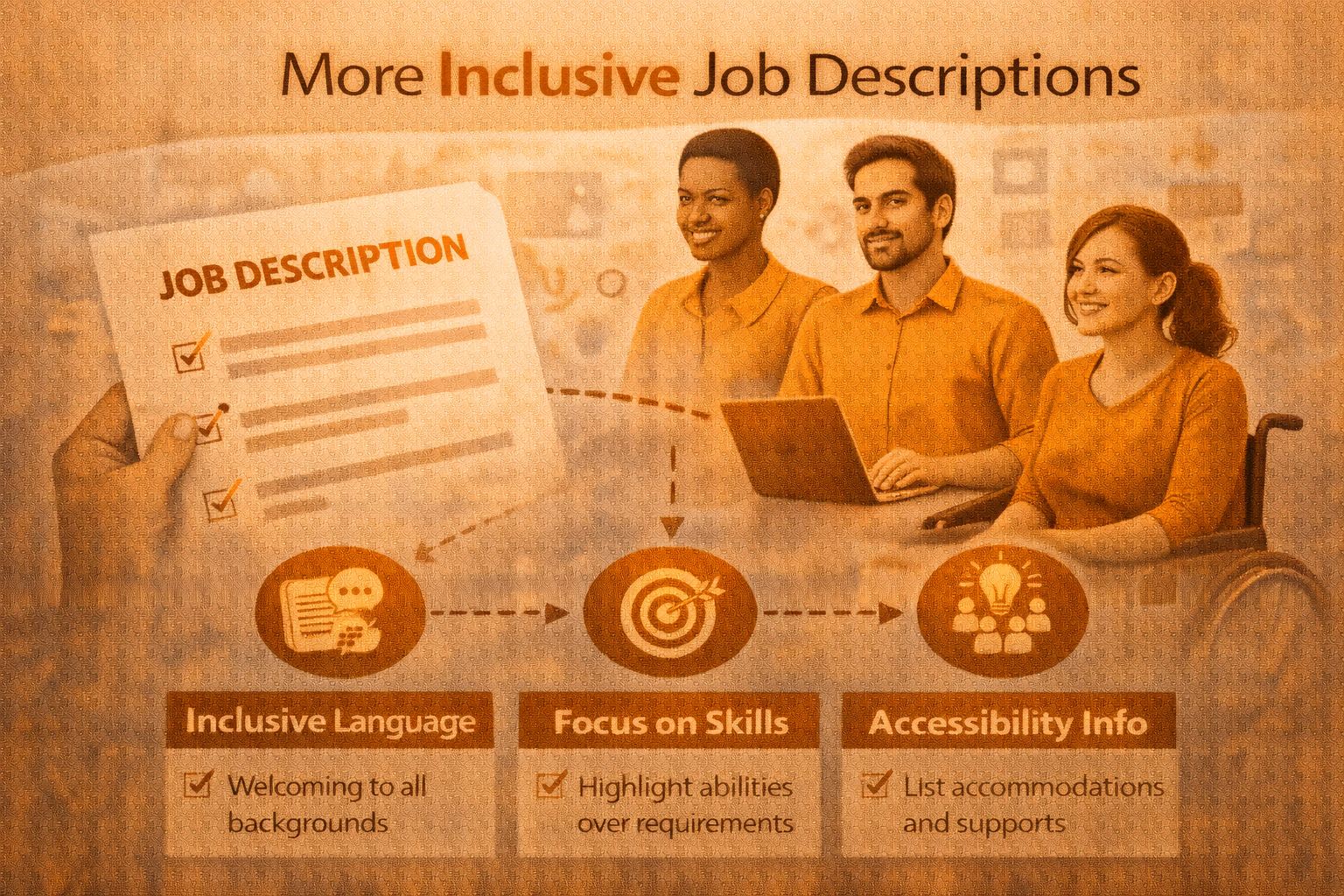
Traditional job postings often use coded language that signals to certain demographics that they do not belong, even before an application is submitted.
Coded language typically falls into two categories: agentic (masculine-coded) and communal (feminine-coded). Words such as “competitive,” “dominant,” and “leader” are more likely to appeal to male candidates. Meanwhile, “collaborative,” “supportive,” and “nurturing” resonate more with female applicants.
AI-driven linguistic tools use natural language processing (NLP) to audit job descriptions in real-time. These systems scan text for patterns derived from huge historical datasets to identify obvious or subtle descriptors that appeal to a specific demographic while alienating others.
The goal of these systems is not to eliminate all gendered terms but to achieve a neutral tone through linguistic balancing.
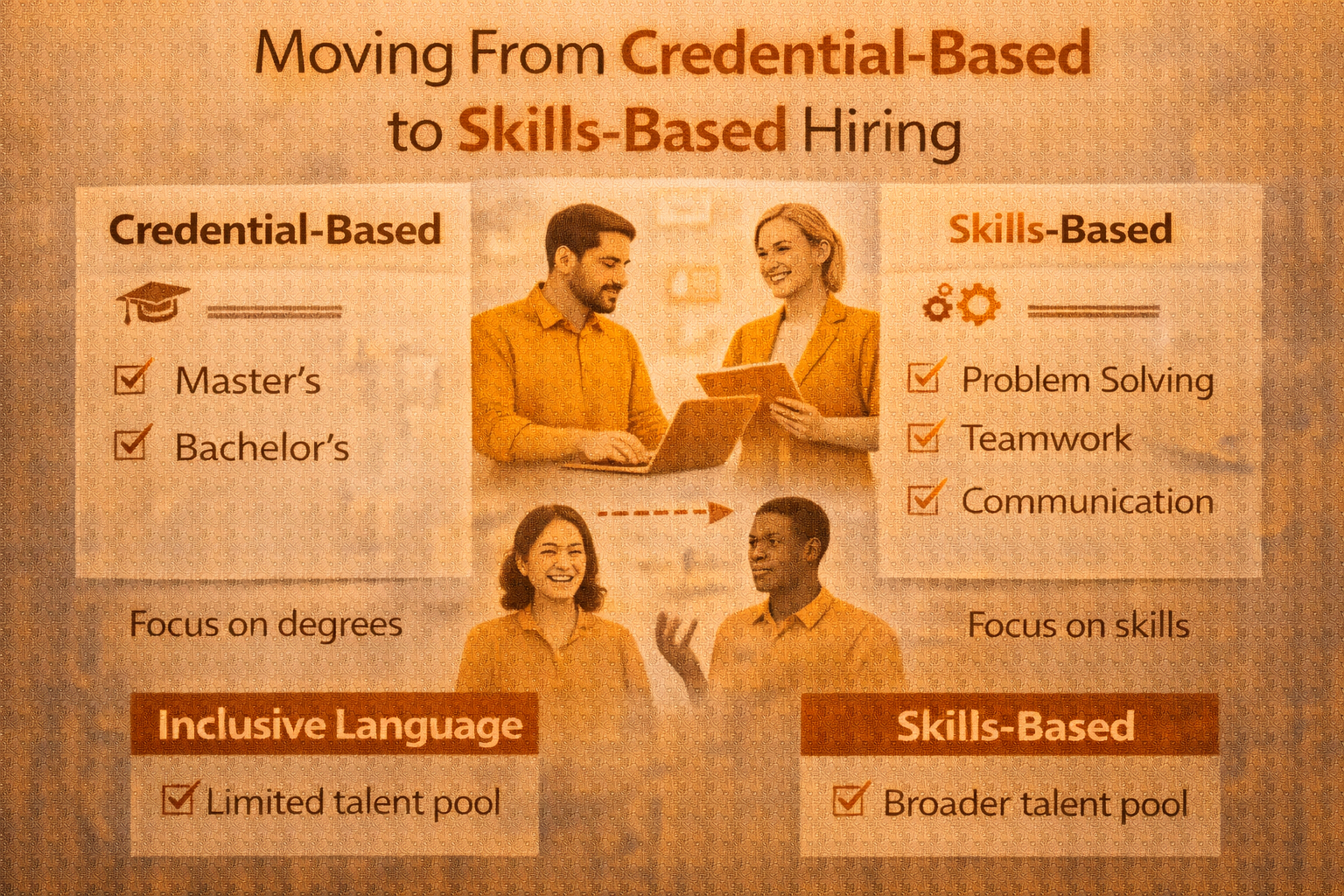
#2 Moving From Credential-Based to Skills-Based Hiring
Traditional 4-year degrees have long functioned as a proxy for competence. But this model is increasingly seen as a barrier to equity. Only 53.5% is the graduate rate in 4-year institutions, and 30.8% in 2-year institutions.
Skills now matter more than they ever did. Skills-based hiring focuses on what you can do, not where you learned it.
AI-powered platforms can assess skills directly through work samples, simulations, coding challenges, writing tasks, or scenario-based assessments. That opens doors for self-taught professionals, bootcamp graduates, career returners, and people changing industries.
This shift is particularly transformative in high-demand fields like healthcare. Take nursing, for instance. The healthcare industry is currently facing a shortage of nursing professionals.
Traditionally, the path to becoming a registered nurse was long and rigid. However, many professionals who already hold degrees in other fields are transitioning to it through accelerated BSN nursing programs. BSN stands for Bachelor of Science in Nursing.
Elmhurst University explains that professionals complete all coursework as well as gain hands-on experience during clinical placements and campus residencies in accelerated BSN programs.
Instead of filtering them out because they don’t have a decade of clinical history, AI can surface what they do bring to the table, and that is often a lot. This allows healthcare organizations to confidently identify capable, practice-ready nurses who may have taken a non-traditional path into the profession.
#3 Reducing Bias at the Resume Screening Stage
Even when a diverse group of candidates applies, they often face a second hurdle: the resume screening stage.
Human recruiters are susceptible to snap decisions based on surface-level information like a candidate’s name, gender, age, or address. These mental shortcuts, or unconscious biases, can lead to the exclusion of qualified candidates before their actual skills are ever evaluated.
AI-driven resume anonymization, often referred to as blind screening, provides a technical solution to this human frailty.
These platforms use deep learning models to identify and redact personally identifiable information (PII). AI blurs or removes names, photos, and even social media links from the resume. That forces the recruitment team to evaluate a candidate based purely on their proven experience and qualifications.
Advanced tools also redact information that could reveal identity through context, such as the names of specific sororities, religious organizations, or neighborhood-specific addresses.
There is proof that this anonymization works. In just 2 years, Dell Technologies used AI-driven data to triple the number of diverse candidates in its hiring pipeline. That is a 300% increase that proves the power of removing bias.
A More Equitable Future is a Smarter One
The future of work belongs to organizations that understand one simple truth: talent is everywhere, opportunity is not.
You won’t just build more diverse teams if you use AI in your recruitment process. But you’ll also gain access to deeper innovation, stronger perspectives, and more resilient workforces.
After all, it helps you see candidates more clearly and more fairly, especially those who have been historically overlooked by traditional hiring models. It gives recruiters the clarity to focus on skills, potential, and long-term impact rather than surface-level signals.
In doing so, it transforms hiring from a gatekeeping function into a genuine opportunity engine. And that’s how organizations don’t just prepare for the future of work but help shape a more equitable one.
Author Bio: Divya Marwaha is a freelance content writer with experience in diverse niches like business, technology, lifestyle, and recruitment. Besides an interest in writing, she also has a passion for traveling, cooking, and music.