
Changing careers as an adult can feel like starting from scratch. There may be concerns about qualifications, experience, income and whether employers will take a career changer seriously.
But not every career transition requires another degree.
Many occupations value practical ability, communication, problem-solving and hands-on experience alongside — or sometimes instead of — formal academic credentials. For adults who want to change direction without spending several years back in college, developing a targeted skill can be a more accessible starting point.
The key is to approach career change strategically: identify skills that can be learned within a reasonable timeframe, practise them in realistic situations and find ways to demonstrate what you can actually do.
1. Why Career Changers Are Looking Beyond Traditional Degrees
Going back to college can be a major commitment for someone who already has a job, family responsibilities or financial obligations.
A new degree may take several years and can involve tuition, lost working time and a significant change to an established routine. For some careers, formal education is essential. For others, however, employers may place considerable value on practical experience and demonstrable skills.
This is particularly relevant for adults changing careers later in life.
Instead of asking, “What degree do I need?” a career changer can also ask:
- What skills are employers currently looking for?
- How long would it take me to become competent?
- Can I practise this skill outside a classroom?
- Can I build experience without immediately leaving my current job?
- Is there a realistic path from training to paid work?
This approach does not mean education is unimportant. Rather, it means choosing education and training based on the career outcome you want instead of automatically assuming that another degree is the only route forward.
2. How to Identify Skills With a Short Learning Curve
Not every useful career skill takes years to develop.
Some skills can be introduced through short courses, workshops, apprenticeships, supervised practice or repeated hands-on experience. The important thing is to distinguish between learning the basics and becoming genuinely employable.
A short course might introduce a skill quickly, but competence usually comes from practice.
When considering a new skill, look at four factors:
Demand: Are businesses actually hiring people with this ability?
Accessibility: Can you learn the fundamentals without committing to years of formal education?
Practice: Do you have opportunities to practise in realistic situations?
Progression: Is there a pathway from beginner-level work to better-paying or more specialised opportunities?
For example, someone interested in hospitality might explore hands-on bartender training rather than immediately pursuing another academic qualification. Practical training can introduce techniques, equipment, customer interaction and workplace expectations in a way that is directly connected to the job.
The same principle applies to many other fields. The best skill to learn is not necessarily the easiest one. It is one that offers a realistic bridge between where you are now and where you want your career to go.
3. Hands-On Skills vs. Theoretical Knowledge
Theoretical knowledge and practical skills are not opposites.
In many careers, the strongest candidates combine both.
Someone working in hospitality, for instance, needs to understand more than how to perform individual tasks. They also need communication skills, customer awareness, organisation, time management and the ability to respond when circumstances change.
The same applies to trades, technology, sales, creative work and service-based careers.
A career changer should therefore look for opportunities to turn information into action.
Reading about a skill is useful.
Watching demonstrations is useful.
But actually performing the task, receiving feedback and repeating it under realistic conditions is what builds confidence and competence.
This is one reason practical training can be particularly valuable for adults changing careers. It can shorten the gap between “I have learned about this” and “I can actually do this.”
4. Hospitality and Other Service Careers
Hospitality offers a useful example of how practical skills can create alternative career pathways.
Roles such as bartending require technical knowledge, but they also depend heavily on interpersonal skills. A bartender may need to communicate with different types of customers, work quickly during busy periods, maintain organisation and respond calmly under pressure.
These are skills that can be developed through practice rather than exclusively through traditional academic study.
For someone considering bartending as a new career direction, structured practical training can provide an opportunity to learn fundamental techniques while becoming familiar with the expectations of the role.
More broadly, hospitality demonstrates an important principle for career changers: a skill becomes more valuable when it can be applied in a real working environment.
5. How Practical Experience Turns Training Into Employability
Completing a course is only the beginning.
One of the biggest challenges for career changers is explaining how newly acquired skills translate into workplace value.
Imagine someone who has spent ten years working in an office and decides to move into hospitality. Simply saying, “I completed a bartending course” may not tell an employer enough.
They should also be able to demonstrate what they can do.
This might include:
- Preparing drinks accurately and consistently
- Managing several customer requests at once
- Maintaining an organised workspace
- Communicating clearly with customers
- Handling busy service periods
- Working effectively as part of a team
- Following responsible service procedures
The same principle applies outside hospitality.
A person moving into digital marketing could create sample campaigns. Someone learning photography could build a portfolio. An aspiring web designer could create example websites. A person entering a skilled trade could document supervised projects and practical experience.
Evidence turns a newly learned skill into something an employer can evaluate.
6. From Employee to Independent Service Provider
Practical skills can sometimes create opportunities beyond traditional employment.
Once someone becomes competent at a particular service, they may eventually be able to work independently, take freelance assignments or build a small service business.
Bartending is another useful example.
A person who develops strong hospitality and event-service skills might eventually work independently at weddings, corporate functions, private celebrations or other events. Rather than being limited to a conventional hospitality job, the skill can potentially become the foundation for a service-based business.
Professional event bartending services demonstrate how the same practical skill can be delivered as a specialised service for clients.
Of course, becoming self-employed involves much more than mastering the service itself. Independent professionals also need to understand pricing, marketing, customer communication, scheduling, contracts and basic business administration.
Nevertheless, the possibility of moving from employee to independent provider can make practical skills particularly attractive to career changers who value flexibility.
7. How to Demonstrate a Newly Acquired Skill to Employers
Career changers often face one obvious disadvantage: they have less professional experience in their new field.
The solution is not to hide the career change.
Instead, demonstrate what you have done to prepare for it.
A strong career-change application can highlight:
Relevant training: Explain what you learned and, more importantly, what you can now do.
Practical projects: Include examples that demonstrate your ability.
Transferable experience: Previous careers often provide useful skills such as leadership, communication, organisation, sales or customer service.
Real-world practice: Volunteering, internships, freelance work, events and supervised projects can all help build evidence.
Results: Whenever possible, describe an outcome rather than simply listing a skill.
For example, “Customer service” is vague.
“Handling multiple customer requests efficiently during high-volume service periods” gives a potential employer much more information.
Career changers should think of their résumé as evidence of capability rather than simply a chronological record of previous jobs.
8. Building a Career-Change Plan Around Skills Rather Than Credentials
A successful career change does not necessarily begin with choosing a college programme.
It can begin with identifying the gap between your current abilities and the requirements of your target career.
Start by choosing a specific role rather than a vague goal such as “I want a better career.”
Then research what people in that role actually do.
Identify the skills that appear repeatedly in job descriptions and industry resources. Separate the essential skills from those that can be learned after entering the field.
Next, find the most efficient way to develop those abilities.
That might involve a short course, practical training, mentoring, volunteering, an apprenticeship or independent projects.
Finally, create evidence that demonstrates your progress.
This approach creates a simple cycle:
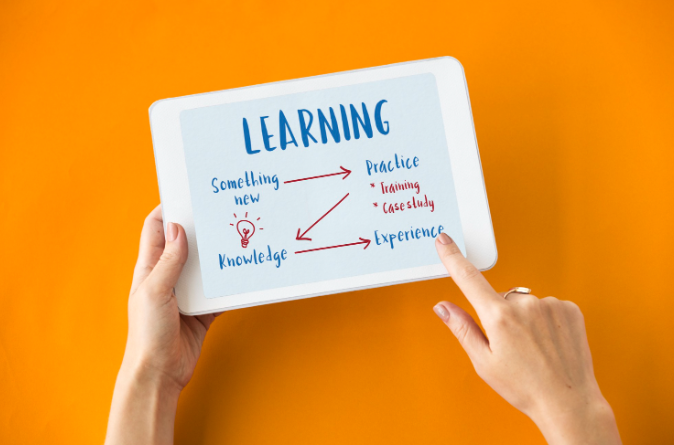
Target career → required skills → focused training → practical experience → evidence → employment or independent work.
For adults who cannot — or do not want to — spend several years obtaining another degree, this can provide a more flexible way to approach career development.
A Different Way to Think About Career Change
Changing careers does not mean everything you have done before becomes irrelevant.
Your previous experience can provide transferable skills while new practical training gives you the technical abilities needed for a different field.
The goal is not necessarily to replace your existing education with more education. It is to identify the specific capabilities that your desired career requires and find the most practical way to develop them.
For some people, that may mean learning a technical skill. For others, it could mean developing a service-based profession, building a portfolio or gaining hands-on industry experience.
A career change becomes much less intimidating when it is broken down into individual skills that can be learned, practised and demonstrated.
You do not always need to start over.
Sometimes, you simply need to add the right skills to what you already know.