
Thriving workplaces are the need of the hour, or they’ve always been. Employee health and well-being rest on them. As McKinsey & Company reported, enhanced employee health and well-being could generate up to $11.7 trillion in total economic value.
Now, we’d have to deviate from ping-pong tables and free snacks. Yes, they’re great, but they do not convey the full picture. What’s most important is to make each day count. For instance, when expectations are clear and task execution is smooth, employees gain confidence that fuels productivity.
Yes, you need to strengthen your workplace processes. This article will share three simple and actionable steps to make it happen.
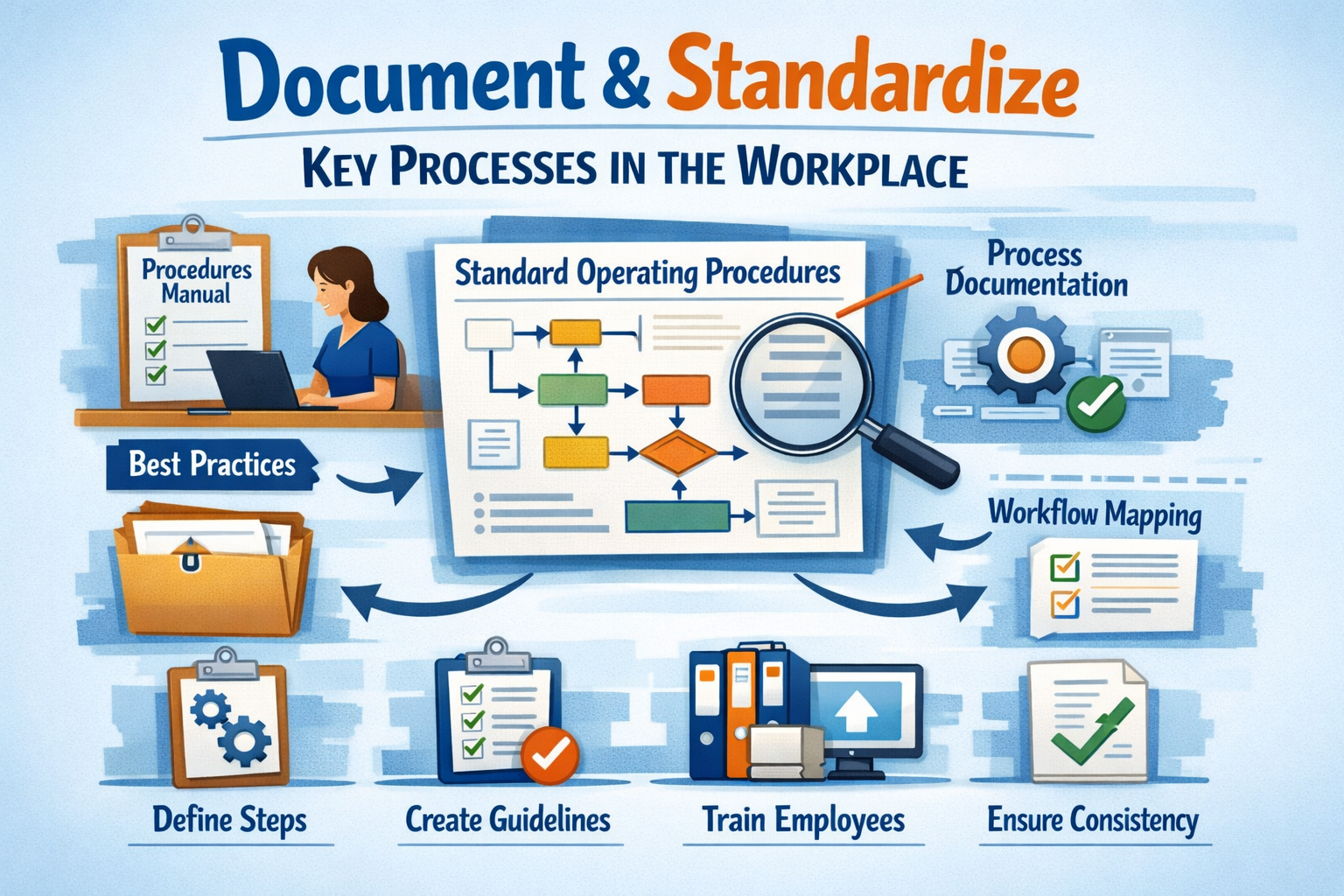
Step 1: Document and Standardize Key Processes
What if your workplace has no standardized processes at all? Soon enough, it would start functioning like a game of telephone. Every person would hear and do something slightly different from the other.
In such a situation, inconsistencies creep in, and errors multiply. Even straightforward tasks can feel like trying to decipher ancient hieroglyphs. When you document and standardize key processes, it gives you much-needed clarity of heart.
Whether it has to do with onboarding or handling customer requests, a shared roadmap reduces guesswork and provides consistent results. Though it doesn’t need to be overly formal, you must ensure it is clear, accessible, and updated periodically.
Let’s look at some practical ways in which you can document and standardize processes effectively:
- Sketch each stage of the workflow from start to finish so everyone can see the full picture.
- Use plain language to convey instructions. This will help someone new to follow without confusion.
- Add visual tools, including flowcharts, to make the procedures digestible.
- Plan for exceptions by outlining what to do if something doesn’t go as expected.
Take the example of a customer support team that once struggled with inconsistent responses to client enquiries. They were able to reduce errors and speed up onboarding through a standardized response guide. This helped the new employees to rely on documented steps instead of trial and error.
Step 2: Implement Proper Monitoring Mechanisms
A process that isn’t monitored is like a gym membership you never use. It’s technically present, but still ends up being ineffective. With proper monitoring mechanisms in place, you can ensure workplace processes don’t remain theories.
This isn’t about micromanaging people. It’s about keeping the workflow on track and preventing small issues from turning into costly crises. Many large-scale organizational problems begin as unnoticed gaps.
In healthcare and product industries, weak monitoring systems have allowed device failures and safety concerns to go unaddressed. Patients were harmed, something which later surfaced in legal actions such as the Paragard lawsuit.
As TorHoerman Law shares, over 3,500 lawsuits were filed and consolidated into a multi-district litigation. Most claims have involved internal injuries resulting from device breakage. The legal issues emerged after risks that started as scattered complaints were not addressed quickly enough.
This is a medical context, but the lesson stands that risk only grows in the absence of a proper feedback loop. Through a structured monitoring system, workplaces can prevent risks. That process would involve the following:
- Defined performance metrics that detect deviations early
- Regular review cycles rather than waiting for crises
- Incident reporting systems that capture even small failures
- Feedback channels where employees can safely flag concerns
- Upskilling of employees, whenever needed
Step 3: Review and Improve Processes Regularly
Has it ever happened that you were using an app because it was trending, only to find it became outdated a year later? Well, this is commonplace because technologies change, and what worked even last quarter may no longer suffice.
This is why it’s important to review processes and make improvements continuously. Don’t make it all about repairs and replacements. You should feel comfortable enough to ask which processes can be made better today than they were a day before.
A good indicator of this trend is the market growth in tools that support ongoing process management. That explains why the worldwide business process management market was expected to become $22.09 billion by 2025. To put regular review into practice, ensure the following:
- Calendar periodic reviews to ensure business processes do not become obsolete.
- Collect valuable feedback from users, so that those executing daily work are able to discern areas of friction easily.
- Employ useful technologies wherever applicable. Manual reviews may not be able to identify issues that dashboards and workplace tools do.
- Make changes gradually since little adjustments work better than dramatic ones.
It’s important to go a step ahead of simply doing things right. Your organization must ensure that it is doing the right things well, day after day.
Chaos only begets chaos. A thriving workplace is never the result of an accident. It’s more like a garden that flourishes only when you water and nurture it regularly. This means, at times, there will be weeds that need to be removed.
Over half of the organizations in a survey said that process improvement efforts help improve efficiency across the business. Intentional refinements are a must to improve performance. In turn, you can create value that builds confidence and resilience.
Author Bio: Deepika is a budding content writer with a strong interest in turning complex topics into content that is engaging and easy to understand. She’s especially drawn to research-backed subjects that encourage seeing things from a new perspective. Outside of writing, novels and fine arts keep her creativity alive.