
Whoever said change is as good as a holiday didn’t factor in the risks involved. When that change affects your career, the stakes are higher.
AI, automation, and machine learning have made it that much harder to feel secure in the role you now hold. Who knows? A decade from now, your job might become obsolete.
Fortunately, not all careers fade with time. Some become more valuable the longer you stick with them. The key isn’t chasing trends. It’s building skills that age well.
If you’re thinking about a career change, this guide is for you. We’ll look at what makes a career future-proof, which skills employers keep asking for, and which roles continue to grow.
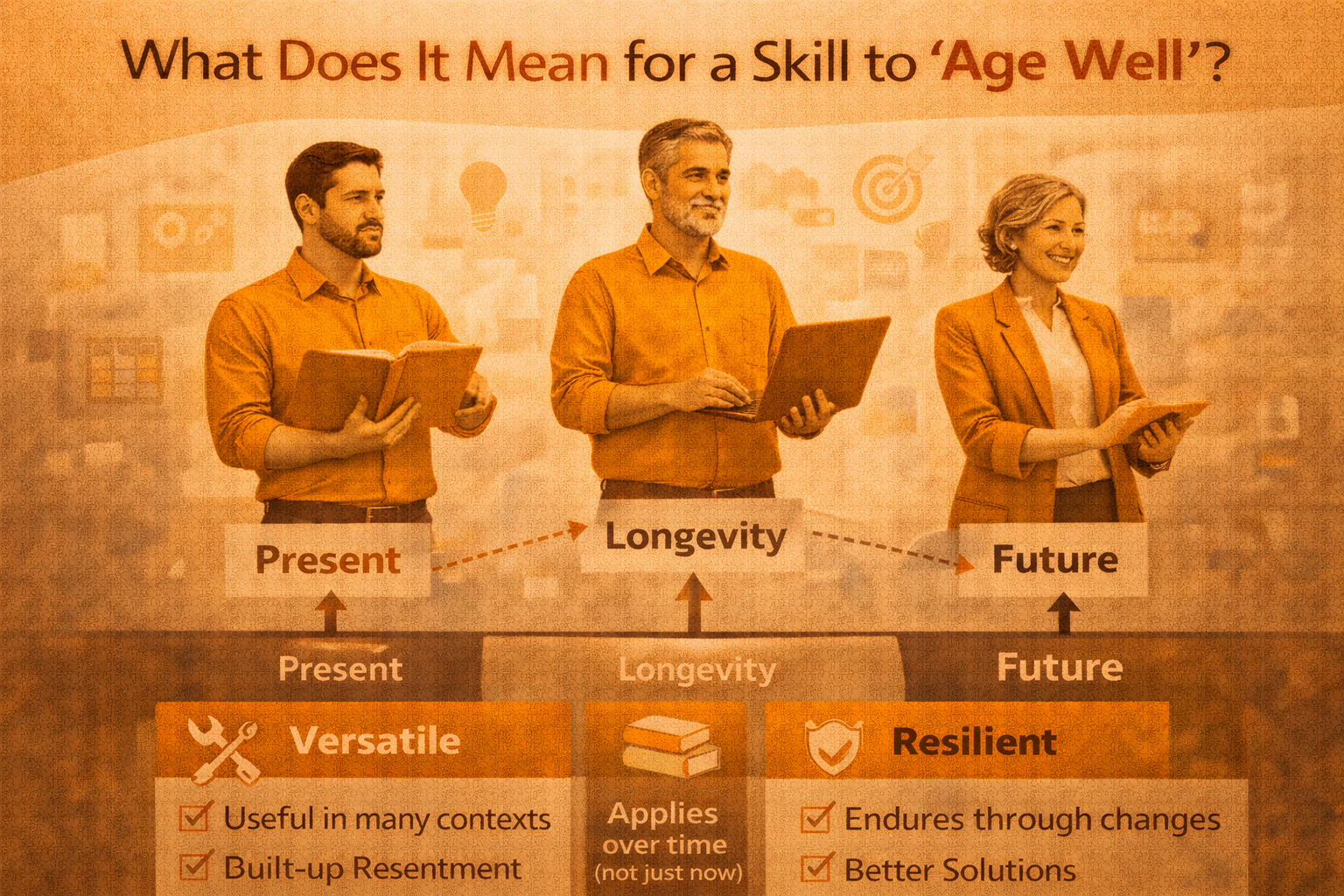
What Does It Mean for a Skill to ‘Age Well’?
Some skills peak early. Others compound. Competencies that age well do three things:
- They get stronger with experience
- They can’t be easily automated
- They transfer across roles and industries
Think judgment. Communication. Problem-solving. Care work. Leadership. TIME reports that the most important skills for the future aren’t technical tricks. They’re human skills that help people adapt, learn, and work with others in an erratic world.
That’s why some careers don’t disappear. They evolve.
Why ‘Fast-Growing’ Isn’t Always Enough
You’ve probably seen lists of the fastest-growing jobs. The U.S. Bureau of Labor Statistics (BLS) publishes one every year.
Yes, growth is a big part of the puzzle, yet speed alone isn’t the full picture. Some jobs grow fast and burn out fast. Others grow steadily and last for decades.
The safest bet is a role that develops and enhances with time, where experience makes you better, not replaceable.
Careers That Get Better With Age
Healthcare Roles That Rely on Judgment
Healthcare keeps growing, and not primarily entry-level roles.
Jobs that require decision-making, patient trust, and real-world experience tend to age well. Family Nurse Practitioners (FNPs) are a strong example.
FNPs don’t merely follow instructions. They assess patients, diagnose issues, and manage long-term care. These are skills that sharpen with practice.
Online FNP degrees make this path more accessible to working professionals who want to move forward without stepping away from work. Online family nurse practitioner programs are designed for flexibility.
Texas Woman’s University explains that accredited online MSN FNP programs arm nursing students with advanced clinical expertise and critical thinking.
Forbes reports that healthcare roles like this continue to show up on future-focused career lists because demand keeps rising and experience matters.
Tech Roles That Solve Real Problems
Not every tech job ages well. Tools may change fast, but problem-solving remains a constant.
Roles that focus on systems thinking, data interpretation, and product decisions tend to last longer than narrow technical roles.
Careers that blend technical knowledge with business sense and communication, particularly in data, cybersecurity, and product roles.
The world will always need data scientists. These individuals identify key questions and use data-driven approaches to find answers. The same goes for information security analysts, who protect networks, systems, and databases.
The common thread? These roles rely less on tools and more on thinking.
Education, Training, and Coaching
Learning never stops as technology moves faster.
That’s why education-focused roles continue to expand. This applies to teachers but also to trainers, instructional designers, and mentors.
Jobs of the future involve helping others learn new skills, especially in fast-changing fields. Experience adds credibility here. People trust teachers who’ve been through it.
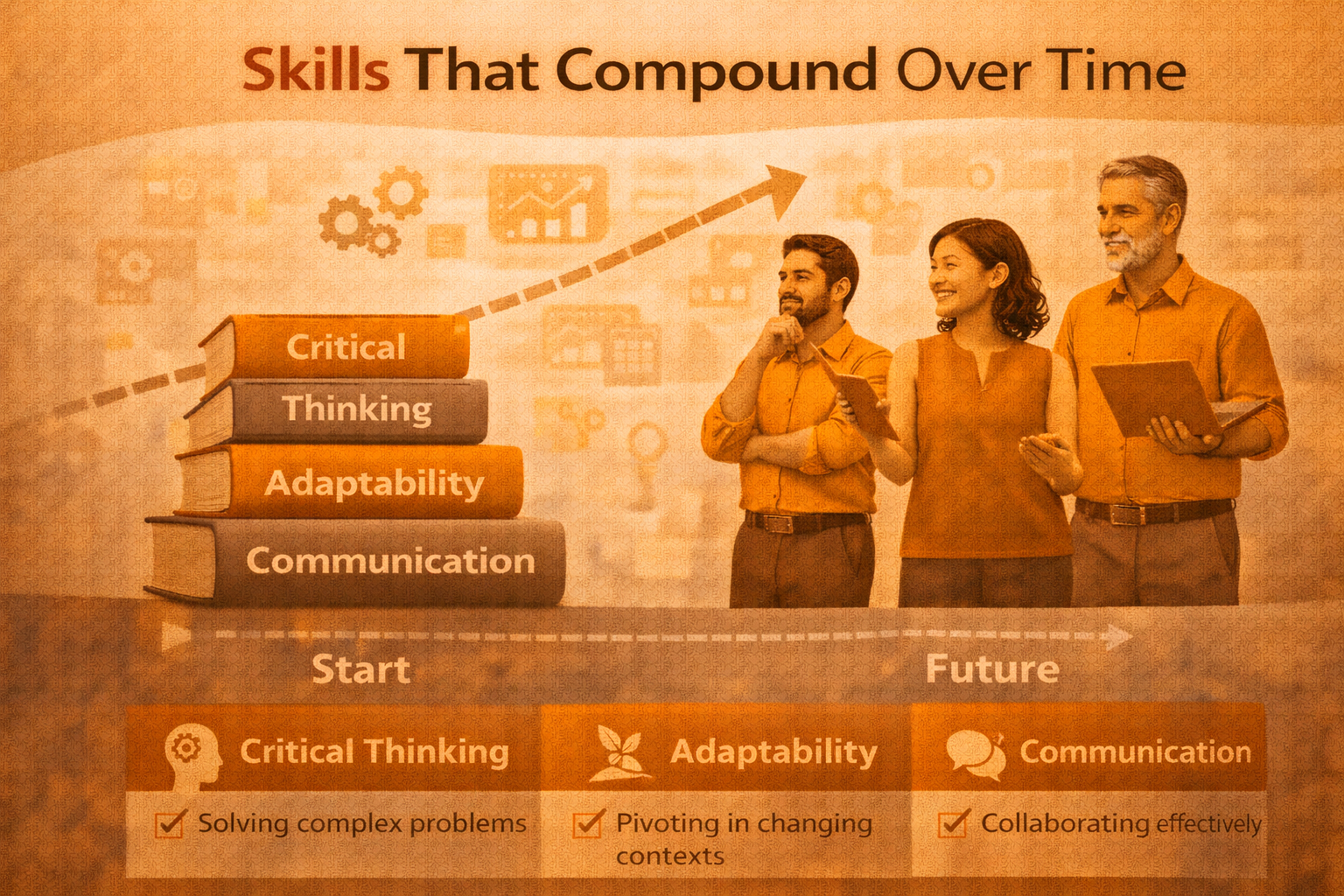
Skills That Compound Over Time
Communication That Works
Clear communication never goes out of style.
Writing, listening, and explaining ideas simply. These skills improve with practice and apply everywhere.
Recruiters list communication as a core talent behind many future career options across industries.
The older you get, the better this skill can become if you use it.
Decision-Making Under Pressure
Anyone can follow a checklist. Fewer people can make calm decisions when things go wrong.
This is why roles in healthcare, operations, leadership, and crisis management age so well. McKinsey’s research shows that as AI takes over routine tasks, human judgment becomes more valuable, not less.
Experience builds context. Context builds better decisions.
Learning How to Learn
This might be the most important attribute of all.
The careers that last aren’t tied to one tool or system. They reward people who can adapt.
TIME reiterates that adaptability and continuous learning sit at the top of future skill lists.
It’s why mid-career education, including flexible online programs, plays such a big part in long-term career value.
Why Career Changers Have an Edge
If you’re considering a career change, here’s something to remember: you’re not starting from zero. You bring:
- Work habits
- People skills
- Problem-solving experience
- Perspective
These transfer better than you think. Roles such as Family Nurse Practitioner, project manager, analyst, or trainer attract career changers since they build on existing strengths while opening new doors.
Online learning options make this shift more realistic than it used to be for individuals balancing work, family, and finances.